July / August 2026
Penn Wireless Association Club Newsletter · W3SK · Serving Lower Bucks County, Pennsylvania
From the President’s Desk
What a summer it has been for the Penn Wireless Association. I want to open this newsletter by saying, plainly and sincerely: I am proud of this club. Field Day 2026 was the best demonstration I have seen of what W3SK is capable of when we all pull in the same direction — from the operators who kept the chairs filled through the overnight hours, to the members who hauled gear, raised antennas, and welcomed visitors to our site at Tyler State Park.
Field Day is not just a contest. It is our annual proof that this club can put stations on the air anywhere, under any conditions, and do it with skill and good humor. This year we proved it in a big way, and every single member who took part owns a piece of that result.
The second half of 2026 is just as exciting. Our Special Event Station series continues, celebrating the remarkable history of Lower Bucks County, and on August 1 we launch our first-ever Hams in the Park. We also have a brand-new home for our General Meetings starting July 20. Read on for the details — and thank you, again, for making this club what it is.
New Home for General Meetings
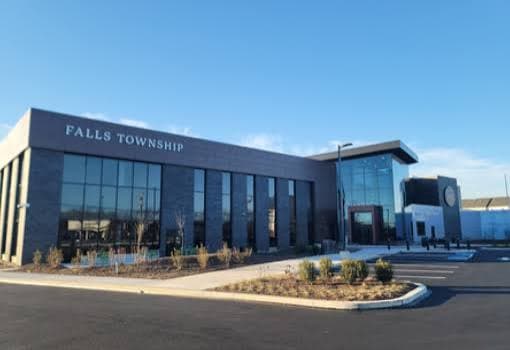
Big news for the club: beginning Monday, July 20, 2026, Penn Wireless Association General Meetings will be held on the third Monday of each month at the newly remodeled Falls Township Municipal Building.
A few things to know for your first visit:
- Meetings are on the second floor of the building.
- Park in the back of the building — that entrance is closest to the meeting space.
- Elevators are available to the second floor, so the new space is accessible to everyone.
We hope to see you all at the July 20, 2026 General Meeting!
Field Day 2026: A Score to Be Proud Of
Operating Class 5A from Tyler State Park on June 27–28, W3SK turned in a claimed score of 5,511 points — 1,059 valid QSOs across CW, digital, and phone, contacts in 77 ARRL/RAC sections, and 1,685 bonus points from 15 claimed bonuses. Our entry has been submitted and confirmed with ARRL.
A result like this comes from people, not just radios. A few of the many members who deserve recognition:
- N2USanchored the CW effort with outstanding rate and accuracy.
- N3JAMled the digital station and kept the FT8/FT4 QSOs flowing.
- N3FELour CW scribe and resident Night Owl, holding down the overnight shift.
- KB3IBTMost Versatile, jumping between modes and stations wherever needed.
- KU3TEKIron Lungs, logging marathon phone sessions.
- KC3INPour Globetrotter, who bagged J2BC in Djibouti from a Field Day site in Bucks County.
- KE2AZL & W3KPYGOTA Elmers who coached newcomers through their first contacts at WE3F.
- KC3KEOhospitality and a warm welcome for every member and visitor who came through the site.
- K3PJHVice President and Traffic Chief, handling message traffic and logistics throughout the weekend.
To everyone who operated, logged, hauled, or simply showed up to cheer the club on: thank you. This score belongs to all of us.
Special Event Stations
Our 2026 Special Event Station series puts W3SK on the air to commemorate the people and places that shaped Lower Bucks County. We opened the series in March with W3P, honoring William Penn, and the response from operators around the country was tremendous. Three more activations remain in 2026 — and each is a chance to work the pileup from the other side.
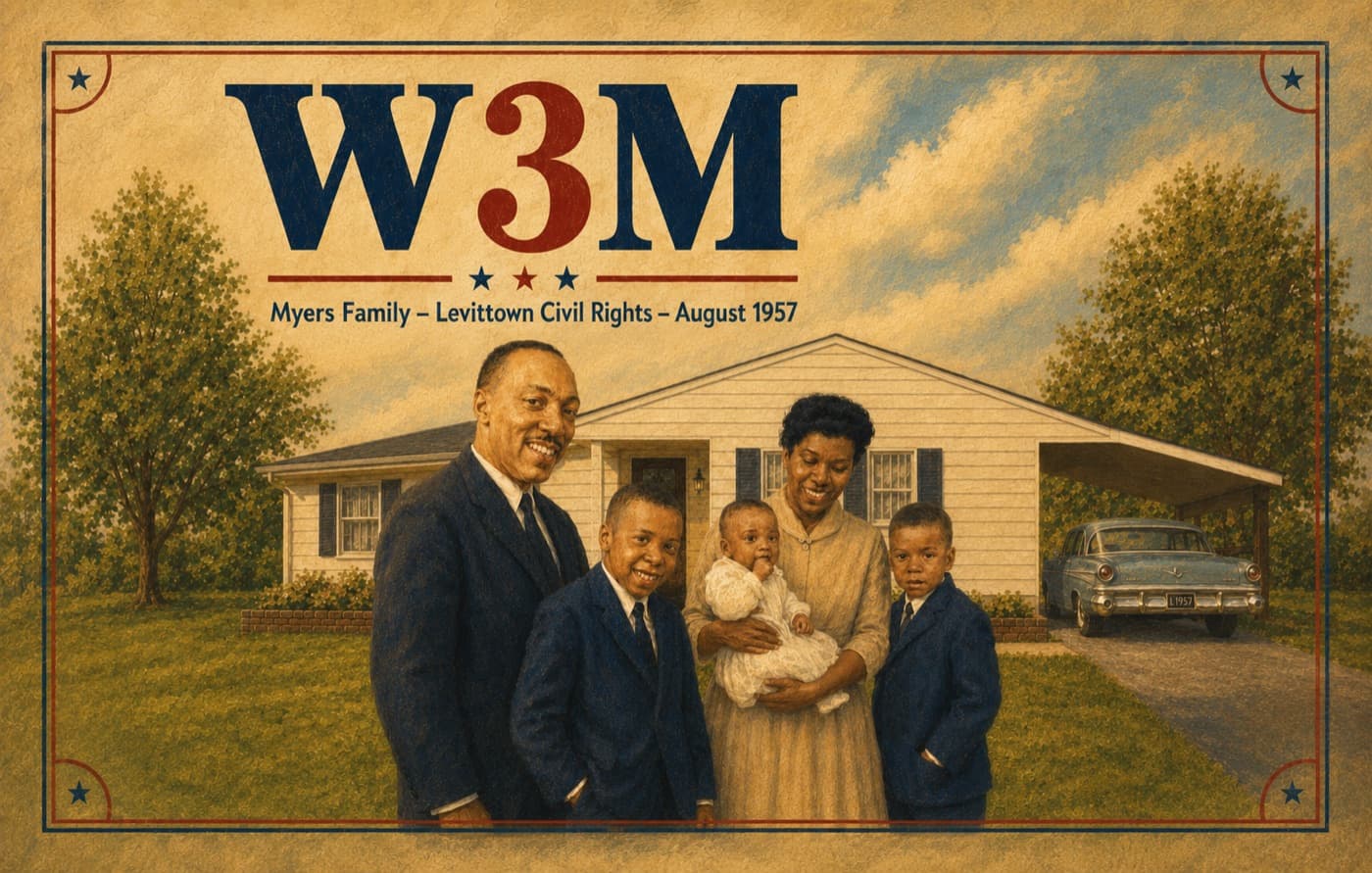
The Myers family and the struggle for civil rights in Levittown
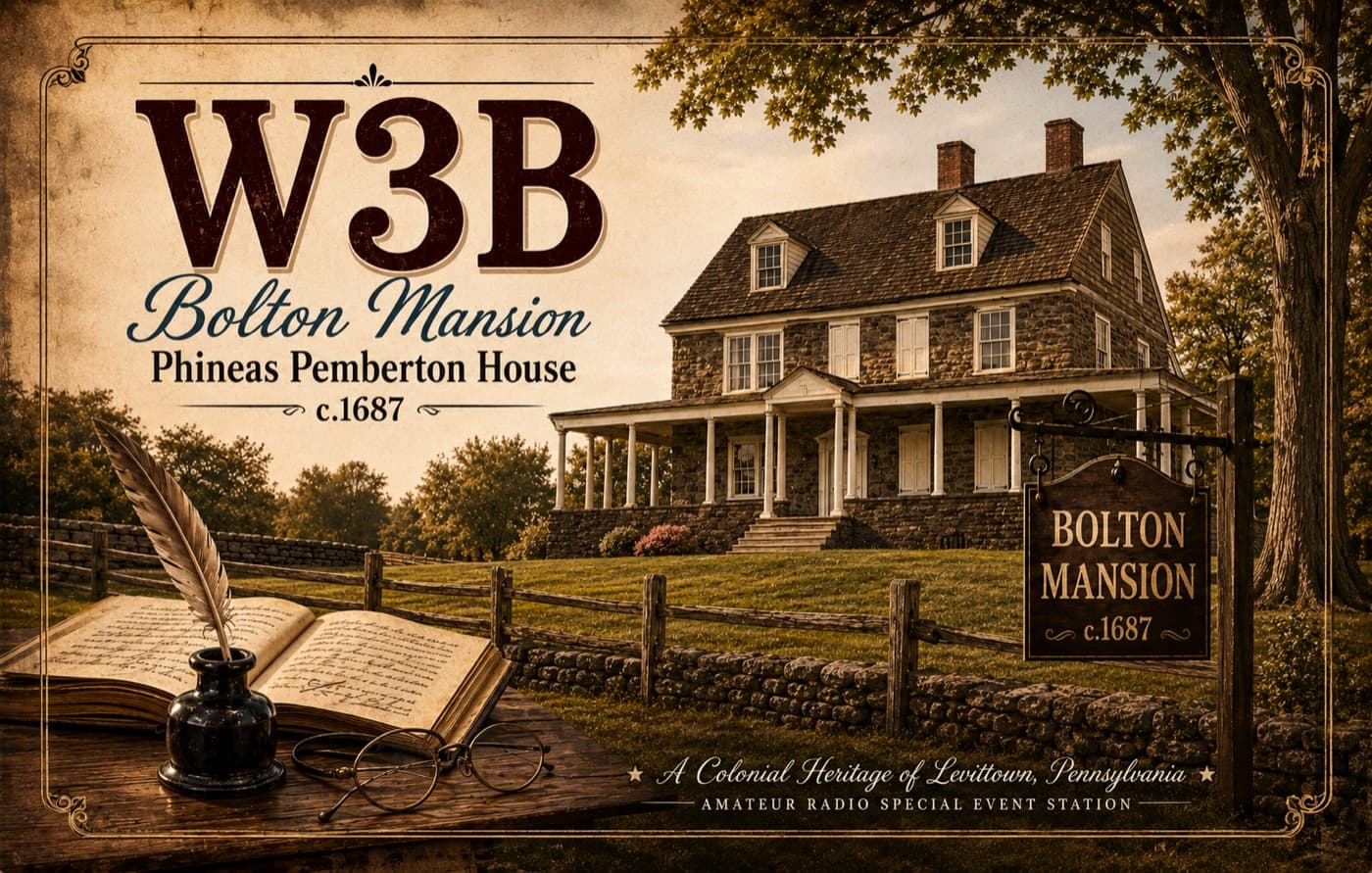
Historic Bolton Mansion (the Phineas Pemberton House, c. 1687)
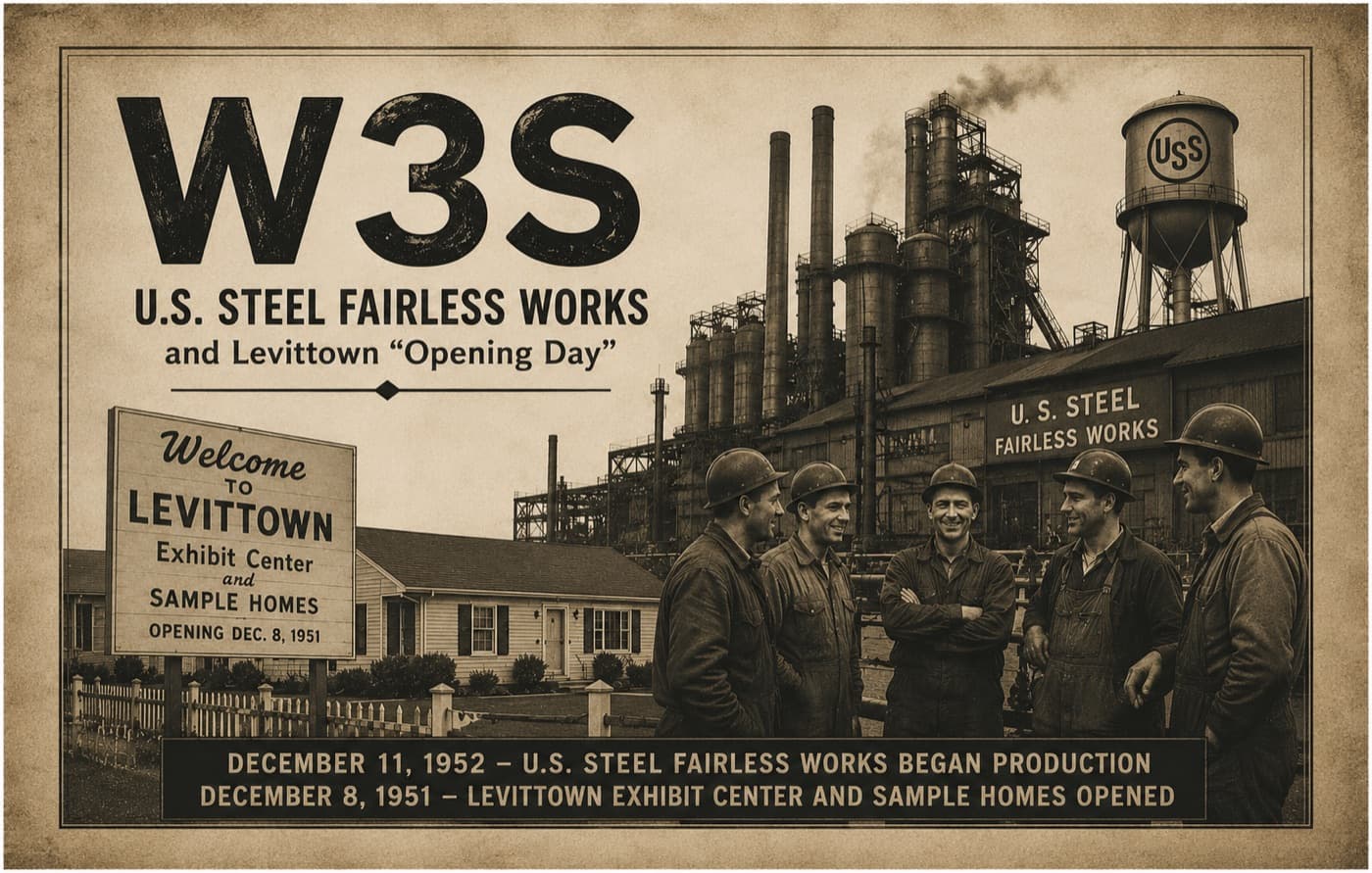
The U.S. Steel Fairless Works and Levittown “Opening Day”
W3M is up first, in August, commemorating the Myers family — whose courage when they moved into Levittown in 1957 made national history in the fight for civil rights. If you have never operated a special event station, this is the perfect way to try it: friendly pileups, a great story to tell, and plenty of experienced members to sit beside you.
Operators are needed for all three remaining events — SSB, CW, and digital. Sign up for your operating slots in the Members Area at pennwireless.org.
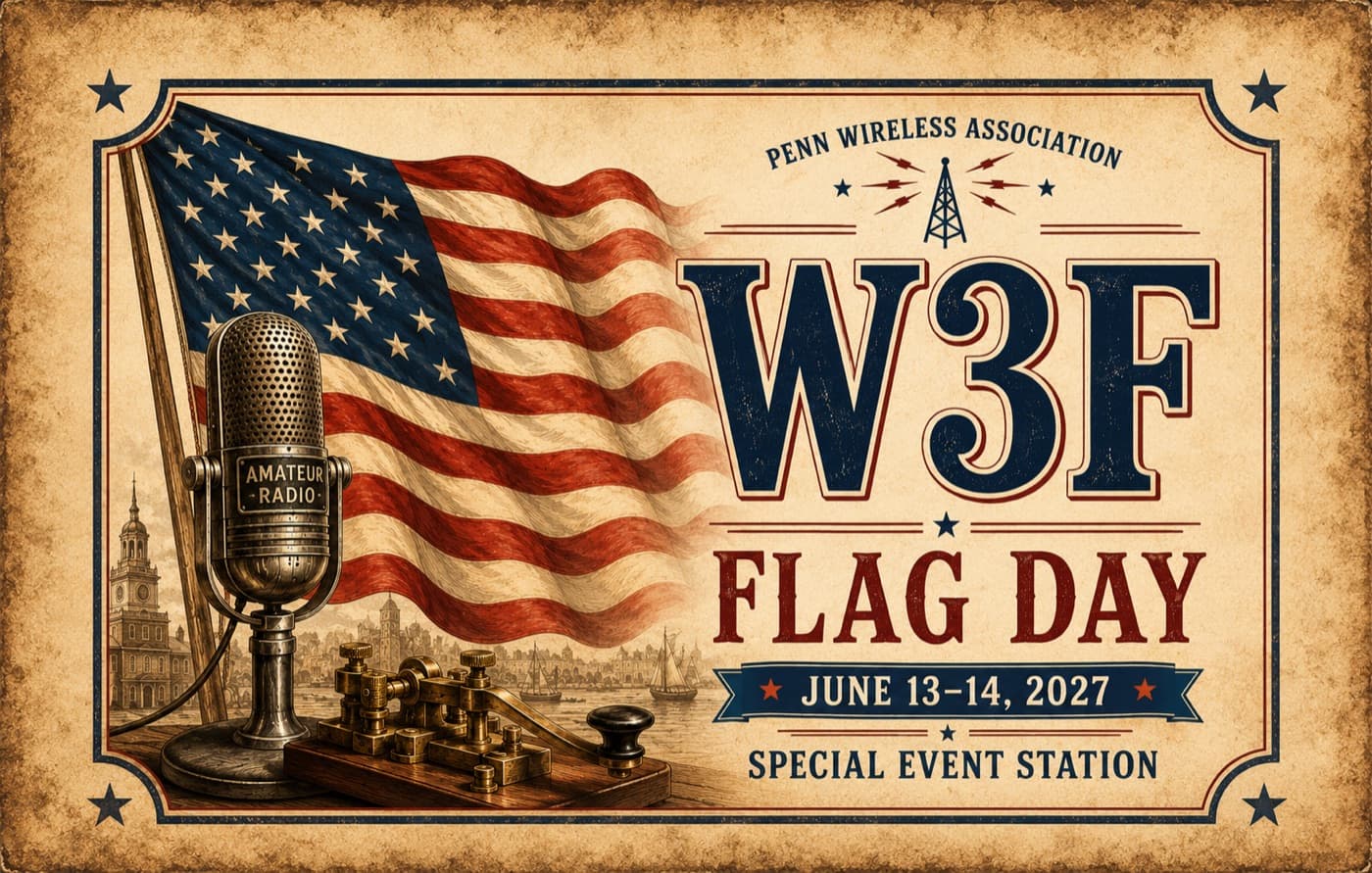
W3F — Flag Day 2027
And the series doesn’t stop at the end of 2026. W3F will take the air for Flag Day, June 13–14, 2027 — mark your calendars now.
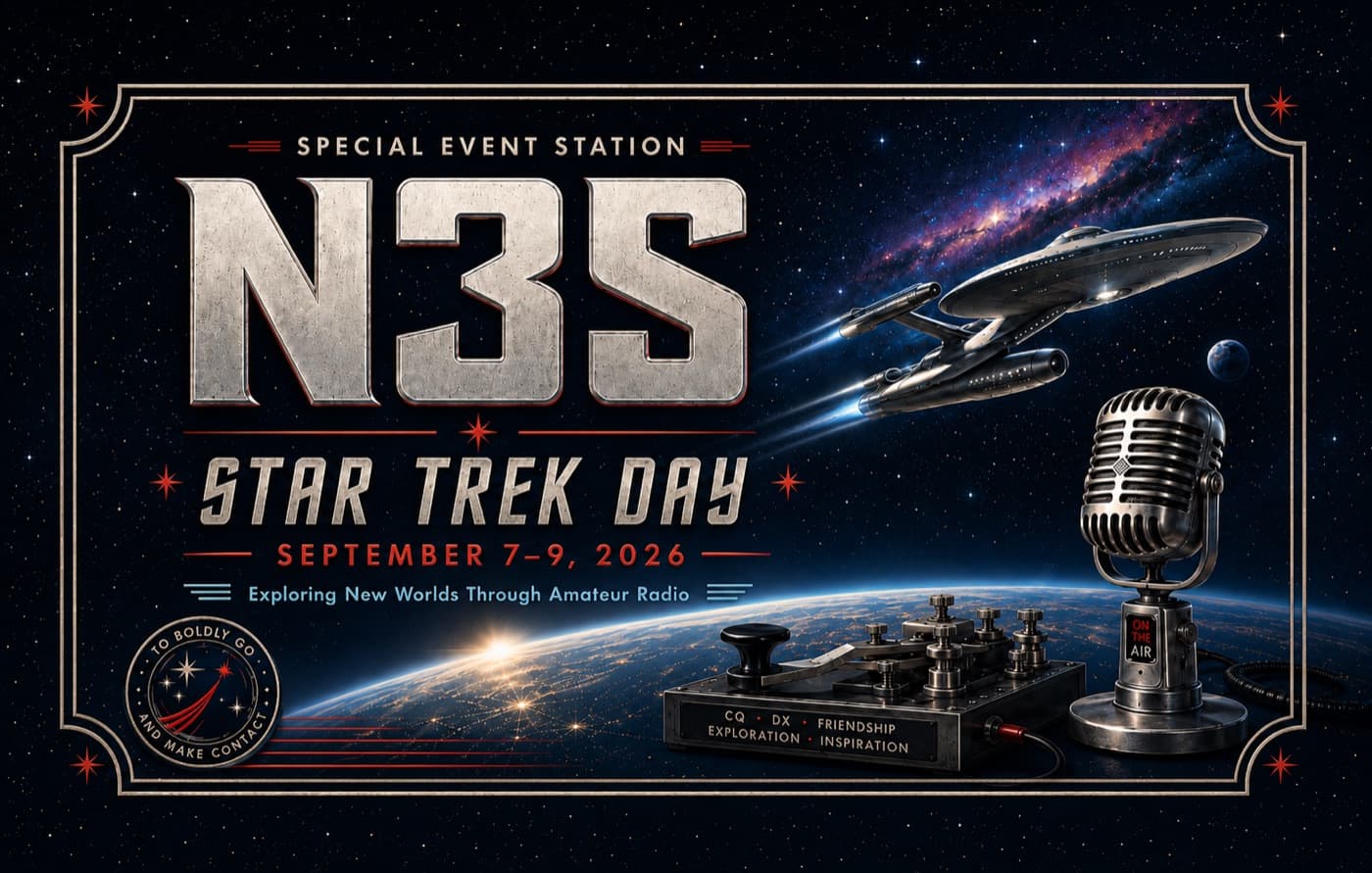
N3S — Star Trek Day Special Event Station
N3S is a Special Event Station celebrating Star Trek Day, operating September 7–9, 2026, commemorating the first broadcast of Star Trek on September 8, 1966 — fittingly, in the franchise’s 60th-anniversary year.
Much like amateur radio, Star Trek is built around the idea of reaching beyond our own world, connecting with others, and exploring new frontiers. N3S brings those themes to life on the air, as operators honor the spirit of exploration, communication, technology, and discovery that has inspired generations of fans.
Whether you are a lifelong Trek fan or simply enjoy the adventure of special event stations, N3S is a chance to celebrate the optimism, innovation, and curiosity that define Star Trek Day. Watch for operating details as September approaches — and yes, working the pileup is a highly logical use of your weekend.
The First-Ever Hams in the Park
This is it — the inaugural Hams in the Park, and you have the chance to be there for the very first one. On Saturday, August 1, the Penn Wireless Association is launching what we intend to make a great club tradition, and we want the founding turnout to be one people talk about for years.
The setting could not be better: the Hickory Nut Picnic Grove at Tyler State Park, one of the finest parks in Bucks County and the same grounds where we just posted our best Field Day in club memory. Hundreds of invitations have gone out to licensed amateurs across the region, so expect to see plenty of new faces alongside your fellow PWA members.
Bring yourself first and foremost — but this is also a perfect excuse to break out the portable gear. Throw a wire in a tree, set up that POTA kit you have been meaning to exercise, or just pull up a chair and talk radio all afternoon. Family members are absolutely welcome. Got gear to sell? Any member who wants to bring items to sell is more than welcome to set up a table — think of it as a mini tailgate built right into the event. One ham’s surplus is another ham’s treasure.
Scouts On the Air in Georgia
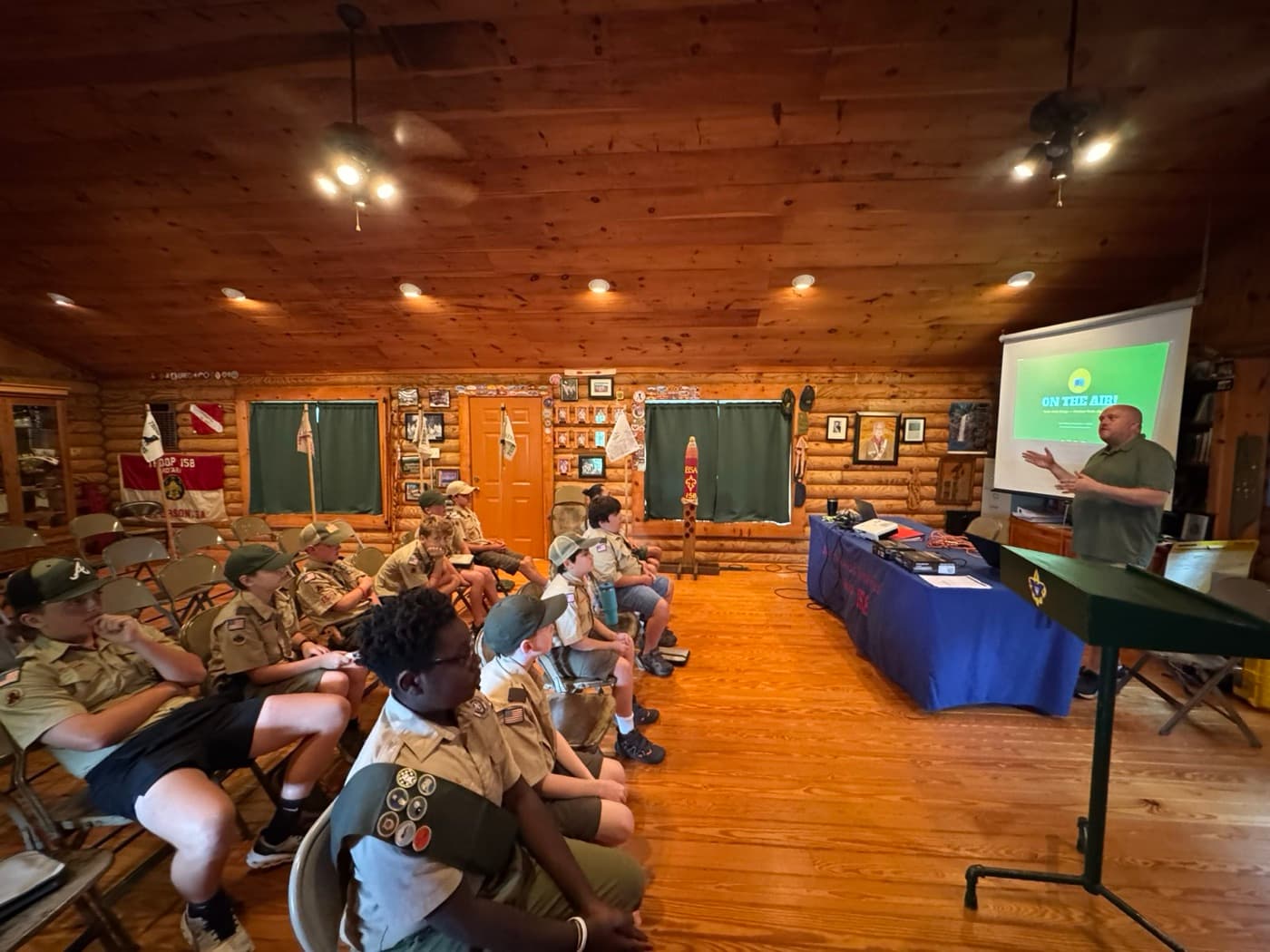
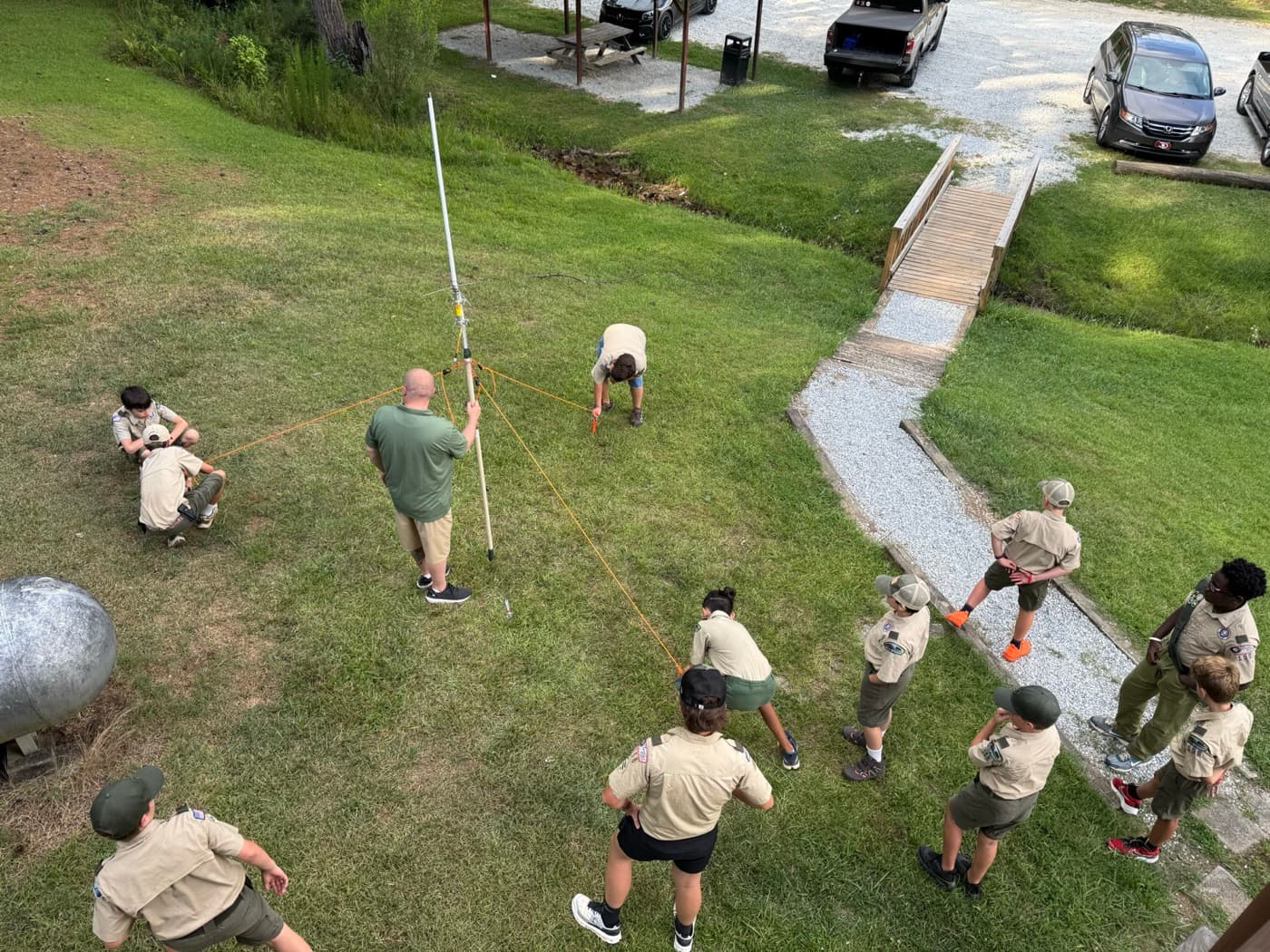
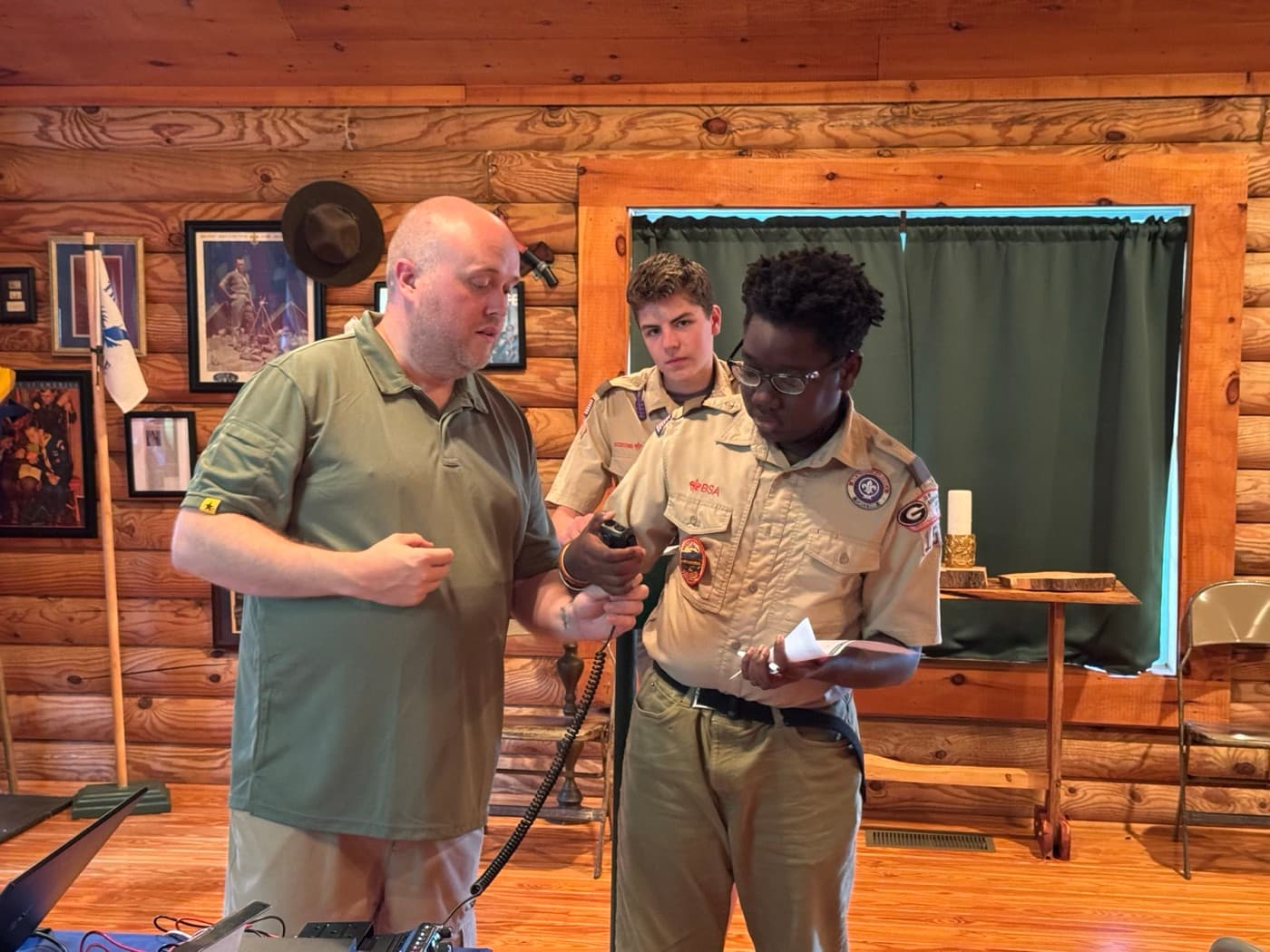
At the beginning of July, club president Chris Hetherington (K0CJH) took amateur radio on the road — traveling to Georgia to bring the hobby to a Scout troop. He put together a full presentation and hauled along a portable station so the Scouts could do more than just hear about radio — they could get on the air themselves.
Over the session, Chris helped roughly 15 to 20 Scouts earn their Radio Merit Badge, walking them from the fundamentals in the classroom to raising an antenna on the field and making real contacts on the air with BSA Troop 158.
None of it would have come together without the generosity of the Athens Radio Club, who opened up their repeater for the evening and had five operators standing by, ready to talk with the Scouts. Having real hams on the other end — waiting to answer a call and swap a few words — is what makes the on-the-air requirement click. It’s exactly the kind of hands-on introduction that turns a curious kid into a future ham, and a great reminder that the best recruiting tool we have is simply handing someone a microphone. Our thanks to the Athens Radio Club for making the Scouts feel welcome on the bands.
Learning CW — My Morse Code Journey
I violated rule number one: keep your mouth shut when people are talking about something you know very little about. Well, during a recent discussion of the club’s Beginning CW class, I mentioned how, even though I was starting from scratch, I was enjoying the process of learning Morse code and how many great tools are available in this age of the internet and cell phone. Then it happened: “Hey Ted, how about you write up an article about your experiences for the club newsletter.” Well, that was when I violated rule number two — I said “yes.” You may ask, here’s a guy that has not even made a CW contact, what does he know? Truthfully, if you are a motivated self-starter, you will do just fine by doing a Google search for “How to learn Morse Code.” I hope to save you some time and add a few helpful insights.
My first suggestion is to view this video: “Step-By-Step Guide to Learning CW Morse Code” by “The Ham Radio Duo,” Michael N4FFF es Becky N4BKY (youtu.be/z8m7VT7RCE0). In addition to my experience during the PWA Beginning CW class, this video provided me with several good suggestions to get me on track.
The most important element: motivation
One of the first things we learn as students is that if we are motivated, we will learn much faster and enjoy it more. So, why learn Morse code? Beyond the technical advantages of this nearly two-century-old innovation, the very act of learning something that is truly a challenge has significant benefits, especially for our brain:
- Brain fitness workout: memorizing and translating the rapid auditory rhythm forces your neurons to fire and builds completely new neural pathways.
- Language learning accelerator: the deep immersion and direct decoding brain states mimic the mental processes required for simultaneous speech interpretation.
- Musical processing sync: operating code is highly rhythmic, offering a creative satisfaction very similar to learning to play a musical instrument.
During our PWA class, Ken (K3FKW) mentioned an interesting article titled “How CW Can Protect You From Dementia” by Dennis Lazar (W4DNN), published in the March 2020 issue of CQ magazine. It cites a 2018 study showing that learning to operate CW leverages the effect of “Dual Task Training” and neuroplasticity to slow and even reverse cognitive decline in older adults. As one tidbit I found put it: Morse code is “the ultimate low-tech, high-reliability superpower that allows you to communicate globally using nothing but sound, light, or touch.” It’s cool and it’s good for your brain.
I had motivation, and the PWA Beginning CW class provided the opportunity. So, I made the commitment and started practicing. After a few weeks I learned most of the alphabet, but I just couldn’t copy more than a letter or two in words — I had fallen into the morass of parsing the dits and dahs. Much of the advice out there says start learning to copy at 20 wpm. The reality for me was I should have started higher. So, I bit the bullet and started relearning everything at 35 wpm. This is where I am now, and it’s working. The goal is “Instant Character Recognition” (ICR) — instantly recognizing each character — and then repetition to make it automatic.
The tools I’d recommend
Android and iPhone; free at a basic level, with a one-time $9 premium license. Recommended by many reliable sources. Suggested tweaks: set Words Per Minute to 30–35 (default 20) to force ICR and discourage parsing; adjust Progress Speed, Time Pressure, and Farnsworth spacing as your proficiency grows. Just remember ICR mastery is the objective, not how fast you move through levels. It also has a sending mode with simulated paddles.
Numerous learning methods and extensive customization (details at iz2uuf.net/cw/about.php); a one-time $12.71 PRO license unlocks the advanced features. I primarily use this while driving — it plays the code, then shows and announces the text by voice, so I can keep my eyes on the road. It supports custom text, call signs, and QSO sequences. The one downside: no iPhone version.
A website for self-instruction with an excellent set of tools supporting various learning methods. We used it as part of the PWA Beginning CW class.
Website-based with offline options and both International and American code (use International). The Morse Machine, Translator, Trainer, and Audio Decoder are all worthwhile — the Translator is especially helpful when you’re first learning to send.
Internet-based sessions conducted via Zoom, highly recommended with flexible class arrangements, especially for beginners. There’s a membership fee, though some classes are offered free.
One benefit of club membership is finding experienced CW operators happy to help — plus groups like CWops and the Straight Key Century Club that run regular on-air sessions for newcomers. And improvise: Roy (AA3RT) taps out license plates on his steering wheel and listens to W1AW code-practice files (arrl.org/code-practice-files) while pushing a shopping cart. Your imagination is the limit.
What’s next? My journey will continue indefinitely. My current objective is to get my ICR to where I can copy a few lines of text at 15 to 20 wpm and make some initial QSOs this summer. I try to get in at least 10 to 15 minutes per day, usually first thing in the morning — having a regular routine is essential. It’s not fast, but by the end of the week I have usually achieved a new milestone, and that gives me the encouragement to continue. I hope this article encourages you to give Morse code a try. I bet you will be surprised by the enjoyment you get from it.
73, KU3TEK
See you on the air — 73!